Week 1 Blog- Technology Integration Framework
The technology integration framework I have chosen that could be used by my district to support technology practices is the Triple E Framework. The three "E"s in the Triple E Framework stand for Engage, Enhance, and Extend. Using the three "E"s the focus is on how the technology can be used as a tool to help student learning. When looking at an educational tool, we need to see how it will engage, enhance, and extend student learning. Starting with engagement, the tool should increase time on task and also have a social or co-use part. Next is enhancement, which Kolb (2020) states is, "enhancement of learning through technology is when the tool is somehow aiding, assisting, scaffolding learning in a way that could not easily be done with traditional methods." This means the technology goes beyond just engaging them, it helps them demonstrate their learning in a more sophisticated way. Lastly there is extension. Extension means students are able to learn skills that will help them outside the classroom and in their everyday lives. Whether it is how to organize, synthesize, or find information. When trying to see if the technology falls within the Triple E Framework, the guiding questions below, can help you assess the tool.
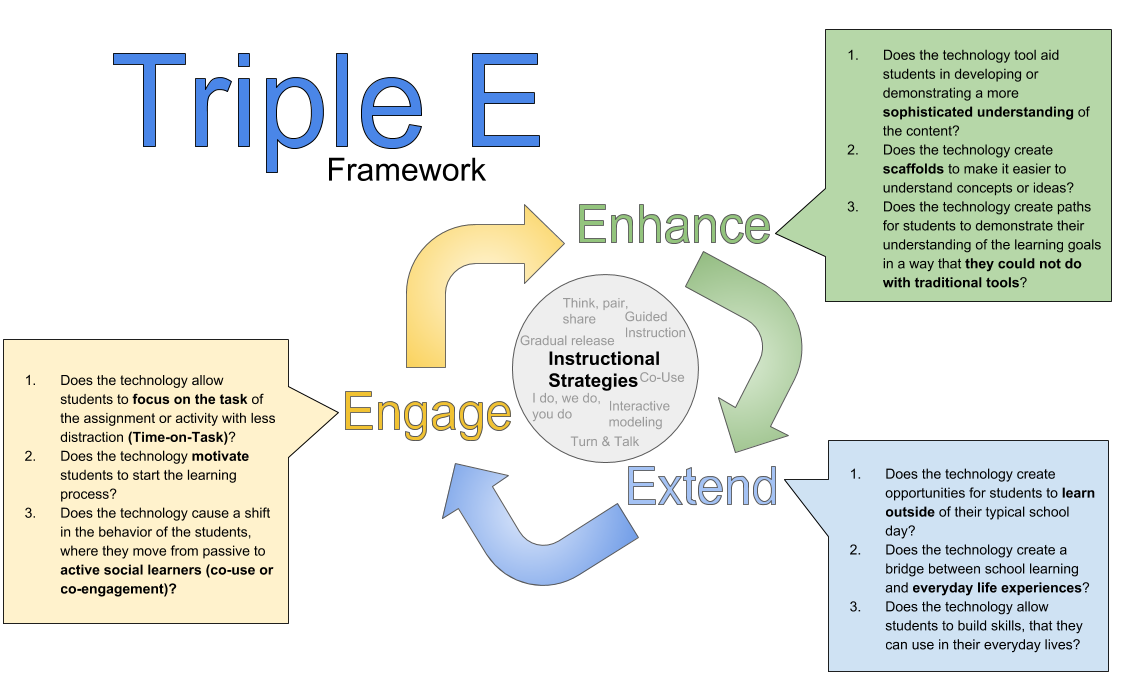
Context: Currently our district is focused on teacher implementation of Gradual Release. We are evaluated on how well we use this framework in our classroom. There are four phases: focused, guided, collaborative, and independent instruction. All of them should be present in your lesson every single day to provide the best instruction to students. The Triple E Framework aligns with Gradual Release because the goal of Gradual Release is to increase student ownership and buy-in. According to Kolb (2020), "Unlike other technology frameworks, the Triple E Framework focus is on the learning goals." When using Gradual Release, we need to have our learning intentions and success criteria posted everyday so the students know the learning goals. This ties in with the Triple E because we want to check how our tools are helping students achieve their learning goals.
Relevance: Triple E Framework shows promise because it is an easy way to check the technology tool we are using and seeing if it is moving our students towards the learning goal. There are nine questions we can ask ourselves, that allow us to see how helpful the technology is or if we are using it just to use it. Being at a small school, all of us teachers know the benefit of technology and how it can engage, enhance, and extend student learning. Having technology allows our students access to such a wealth of information they would not have gotten before it because of our location. Therefore, teachers in the building really use technology as a way to bring more opportunities to our students and engage them in a meaningful way with subject matter.
ISTE Alignment: Kolb's Triple E framework is a way for educators to measure how well technology is helping students engage, enhance, and extend their learning (Kolb, 2020). Engaging in the learning should help time on task and create a shared sense of responsibility in a social sense. ISTE standard 2C wants students to interact online in a way that creates a safe community where they contribute responsible. This fits with engagement because they are being active members in the online world and engaging with the materials to learn more about it. Enhancement means it helps students move beyond just being engaged and the tool helps students somehow. ISTE 3C wants students to organize information in a way that makes sense to them in order to draw conclusions. This fits with enhancement because now students are doing more than just being engaged. They are making inferences, drawing conclusions, and creating a final product. Extension is the last "E" which asks us to reflect on if the technology builds skills to help students outside of school (Kolb, 2020). ISTE 7D is all about local and global issues. It is our job as educators to get our students the opportunity to take their learning outside the classroom and give them real world problems. When doing so, we create a safe environment for them to practice real world skills which is the purpose of extension.
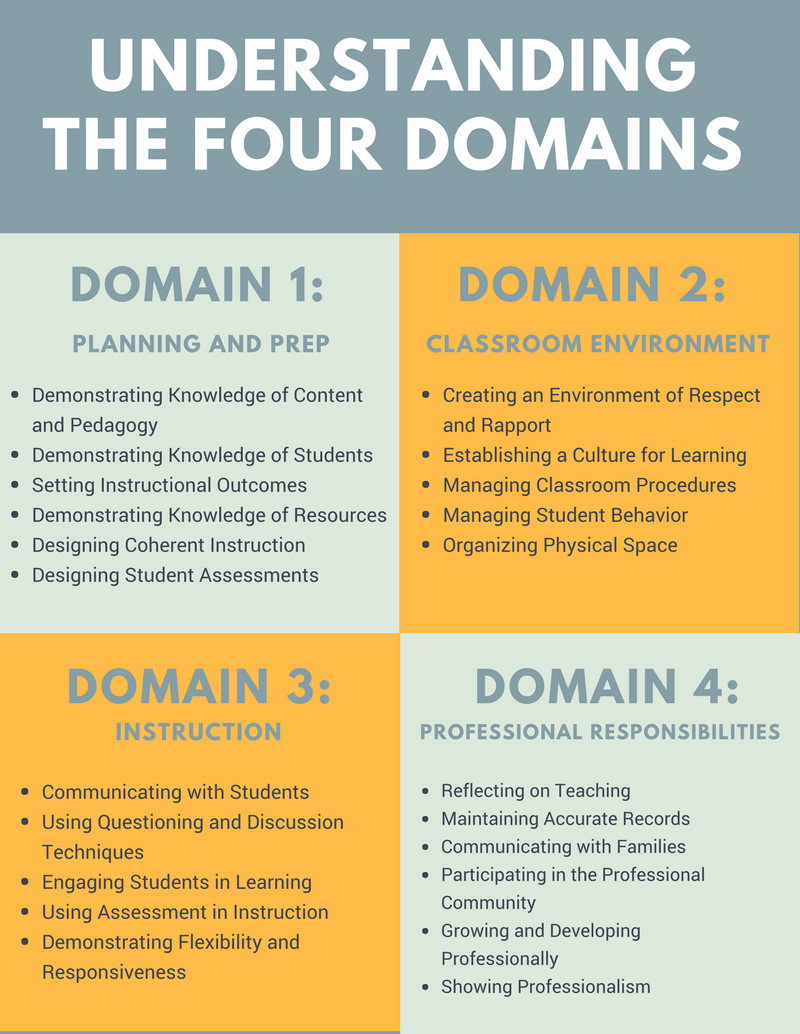
Evaluation: Our district uses The Framework for Teaching by the Danielson Group. There are four domains and the Triple E Framework really aligns with Domain 1 (Planning and Preparation) and Domain 3 (Learning Experiences). ("Professional Development," 2024)
Kolb, L. (2020, December 9). About the Triple E Framework. Triple E Framework.
https://www.tripleeframework.com/about.html
Professional Development Courses for teachers - teacher webinar. Danielson Group. (2024, June 12). https://danielsongroup.org/the-framework-for-teaching/
Comments
Post a Comment